Women’s Wellbeing within the framework of Capability Approach: A Case of Assam, India
Speakers:
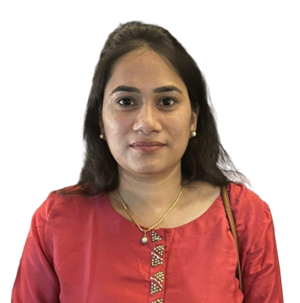
Nijara DekaNCAER
Abstract:-
This study examines women’s well-being in Assam, India, through the lens of the Capability Approach, moving beyond income- and household-based measures to focus on women’s substantive freedoms and lived experiences. Drawing on large-scale primary survey data covering all administrative districts of the state, the study constructs a multidimensional Women’s Capability Index of Assam (WCIA) using the Alkire–Foster methodology at the individual level. The index captures four interrelated capability dimensions—health and hygiene, economic security, social relations, and psychological and emotional well-being—operationalised through eleven indicators reflecting both external conditions and internal freedoms, including dignity, mobility, voice, sleep adequacy, and exposure to violence. The results indicate that 31 per cent of women in Assam experience multidimensional capability deprivation, with deprived women facing substantial intensity of overlapping disadvantages. Decomposition and regression analyses reveal pronounced inequalities by education, work status, household structure, region, and social group, highlighting the vulnerability of unpaid family workers, unemployed women, and those with low education. The findings underscore that women’s capability deprivation is shaped not only by material constraints but also by social norms, power relations, and institutional contexts. By offering a context-sensitive, capability-based measure of women’s well-being, the study contributes to empirical capability research in India and provides policy-relevant insights for advancing gender-equitable human development.
To register for this event please visit the following URL: https://us06web.zoom.us/meeting/register/q0-ffnIhRRWRwgq4pw-7Yw →
Date & Time
11:30 AM to 01:00 PM (IST)
Location
Event Type
Event Category
Speaker(s)
Nijara Deka
Moderator(s)