

Kautilya Economic Conclave 2026 (3–5 October 2026)
The Kautilya Economic Conclave (KEC) is the annual flagship initiative jointly convened by the Institute of Economic Growth (IEG) and the Ministry of Finance, Government of India. Its fifth edition will be held in New Delhi from 3 to 5 October 2026, bringing together policymakers, economists, leaders of public institutions, representatives of business and civil society, and scholars from India and abroad to examine the choices confronting national economies and the international economic system.
Established in 1952 through the vision of the eminent economist and institution-builder Professor V.K.R.V. Rao, the IEG has for over seven decades brought rigorous scholarship in economics and the social sciences to bear on India’s development and public policy. Recognised as a Centre of Excellence, the Institute is also the designated training institute for officers of the Indian Economic Service, who serve across government as professional economic advisers.
IEG’s faculty and leadership have included a wide range of distinguished intellectuals and policymakers. Its Presidents have included two former Prime Ministers of India: Jawaharlal Nehru, its first President, and Dr Manmohan Singh, who served as President of the IEG Society for nearly three decades. As a leading research centre, IEG has also hosted renowned scholars over the decades, including Nobel laureates James Heckman, Lawrence Klein, Elinor Ostrom, and Amartya Sen.
IEG’s multidisciplinary faculty of economists, demographers, and sociologists conducts impactful research across a range of domains, with the research programme regularly updated to incorporate new questions, approaches and methodological techniques in response to changing policy needs.
Since its inception in 2022, the Conclave has developed into an important forum for evidence-based dialogue on India’s economic transformation and the global policy environment. Its successive themes have traced the movement from post-pandemic recovery to geopolitical fragmentation, India’s growing global role, and the search for durable prosperity amid uncertainty:
- The Inaugural Edition in 2022, themed “Redefining the Future”, focused on the long-term implications of the pandemic, supply chain disruptions, fiscal policy recalibration, growth and inclusion.
- The Second Edition in 2023, themed “Navigating a World on Fire”, examined geopolitical tensions, inflation, fragmentation and the challenges facing multilateralism and emerging markets.
- The Third Edition in 2024, titled “The Indian Era”, explored India’s growing role in the Global South, its aspiration to become a developed nation by 2047, green transition financing, industrial policy and the governance of AI.
- The Fourth Edition in 2025, themed “Seeking Prosperity in Turbulent Times”, examined prosperity in a fractured global order, strategic autonomy, multilateral institutions, climate resilience, debt sustainability and the role of Asia in shaping the global economic order.
The Conclave has been strengthened by sustained high-level engagement. The Prime Minister’s Special Address has set out his vision for a developed India and the opportunities ahead. The Finance Minister has supported the endeavour through successive editions, while the Minister of External Affairs has presided over the Closing Plenary and placed the deliberations within the wider international context.
The 2026 Theme
The world is entering a period in which disruption is no longer episodic but structural. Strategic rivalry is reshaping trade, technology and investment. Supply chains are being reorganised around security as well as efficiency. High debt and constrained fiscal space are limiting the capacity of governments to respond to shocks. Climate change is intensifying pressures on food, water, health and infrastructure. Artificial intelligence is changing production, employment and the distribution of economic power. Demographic transitions are proceeding unevenly, while institutions designed for a more stable international order face declining trust and effectiveness.
In this setting, resilience cannot mean merely enduring one crisis after another, nor can it become a rationale for economic withdrawal or permanent protection. It is the capacity to anticipate risk, absorb shocks, adapt institutions and preserve the foundations of sustained growth.
A resilient economy must retain macroeconomic credibility, productive capacity and policy space while remaining open to trade, investment, technology and ideas. It must also ensure that the costs of adjustment do not fall disproportionately on those least able to bear them.
The theme “Resilience in an Age of Flux” therefore provides the organising framework for KEC 2026. The Conclave will consider resilience not as a defensive objective, but as a positive programme of reform: strengthening public institutions; widening sources of finance and growth; building competitive and adaptable firms and labour markets; protecting natural and social systems; and creating international partnerships capable of functioning even when the wider order is contested.
India and the Wider International Context
India enters this period from a position of considerable economic strength. Real GDP grew by 7.8 per cent in the first quarter of FY 2026–27, supported by manufacturing, services and investment. The Union Budget 2026–27 sustained the public-investment push, with Rs 12.22 lakh crore for capital expenditure, while targeting a lower fiscal deficit of 4.3 per cent of GDP.
These gains are significant, but the test of resilience is whether India can convert momentum into durable, employment-rich and inclusive growth while managing inflation, energy volatility, climate stress and uneven global demand.
India’s international position has also evolved during 2026. The conclusion of India-EU Free Trade Agreement negotiations widened the country’s trade and strategic options, while India’s BRICS presidency, organised around resilience, innovation, cooperation and sustainability, strengthened its role in articulating the priorities of emerging markets and the Global South.
KEC 2026 will examine how India can use these platforms, alongside partnerships with Asia, Africa, the United Kingdom, the United States and others, to diversify markets and supply chains, mobilise finance and technology, and preserve the gains from interdependence amid strategic competition.
KEC 2026
The Fifth Kautilya Economic Conclave (KEC 2026) will brought together policymakers, economists, leaders of public institutions, business and civil society representatives, and scholars from India and abroad to deliberate on the challenges and opportunities emerging in an increasingly uncertain global environment.
Under the theme “Resilience in an Age of Flux”, the Conclave explored how economies and institutions can prepare for structural disruptions while preserving openness, growth, inclusion and international cooperation.
KEC 2026 VIDEOS
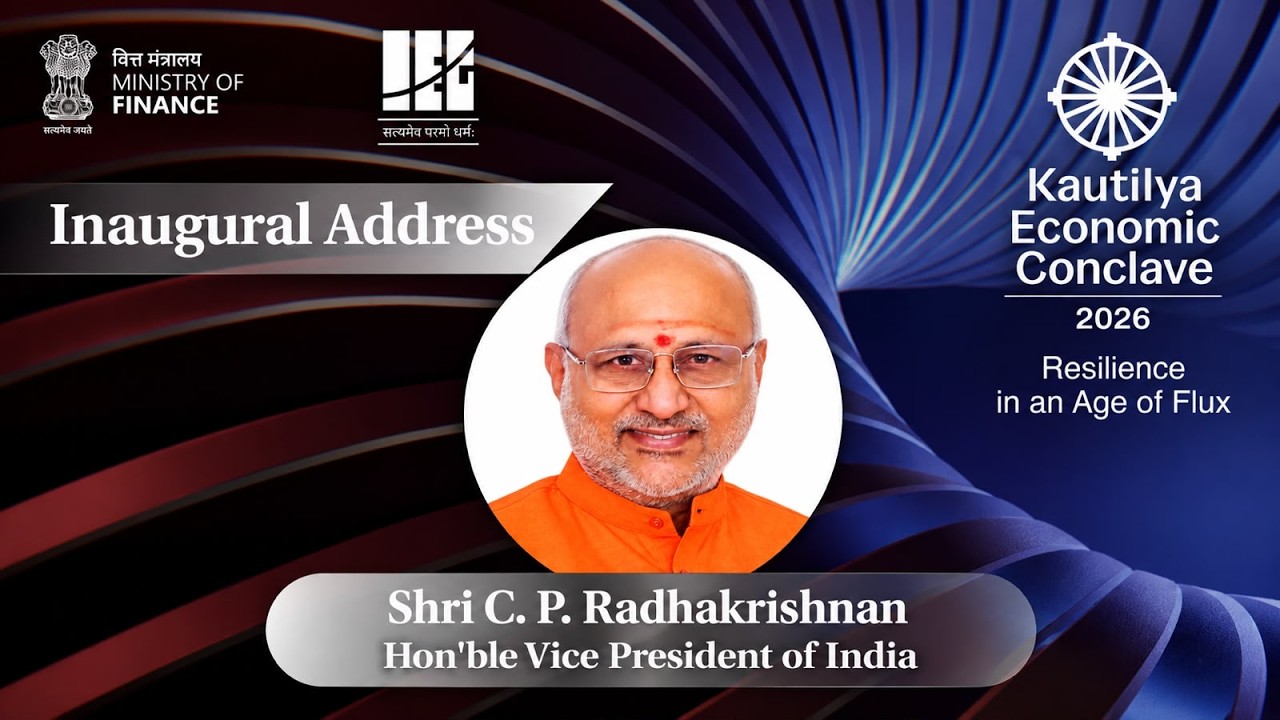
Inaugural Address: Shri C. P. Radhakrishnan, Hon’ble Vice President of India
Inaugural Session of the 5th Kautilya Economic Conclave 2026
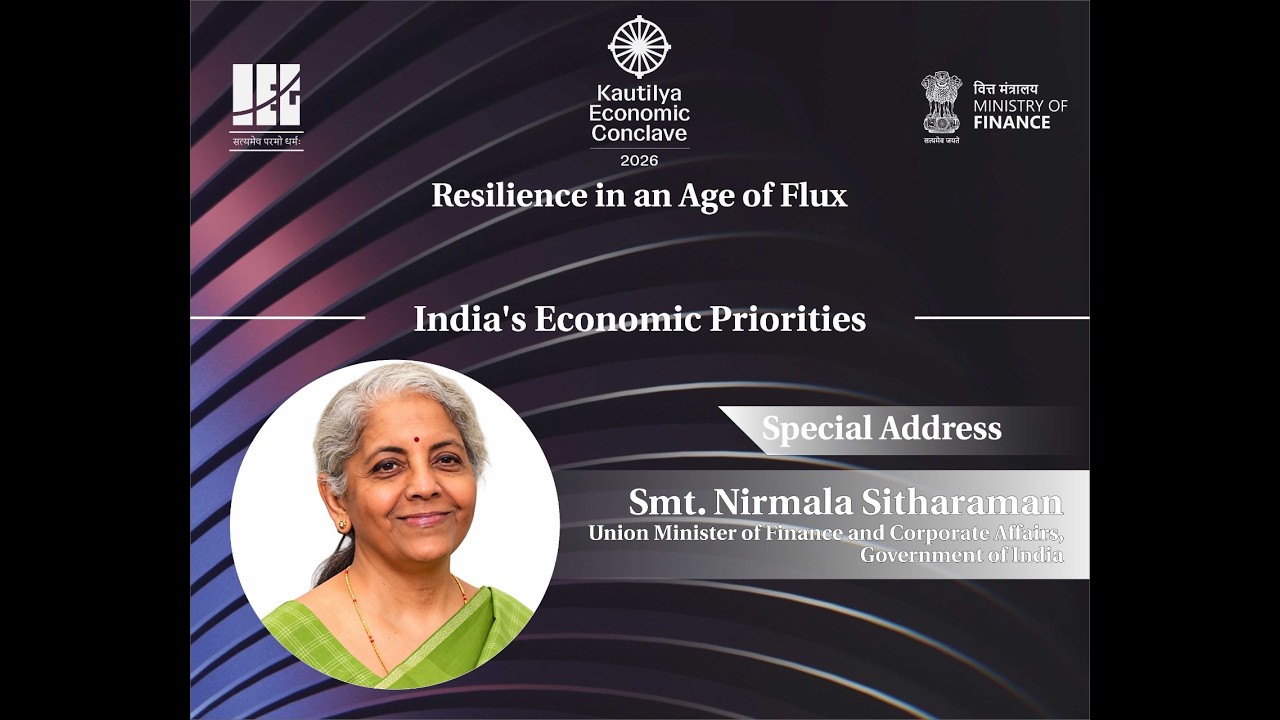
Special Address by Smt. Nirmala Sitharaman
Hon'ble Minister of Finance and Corporate Affairs, Government of India
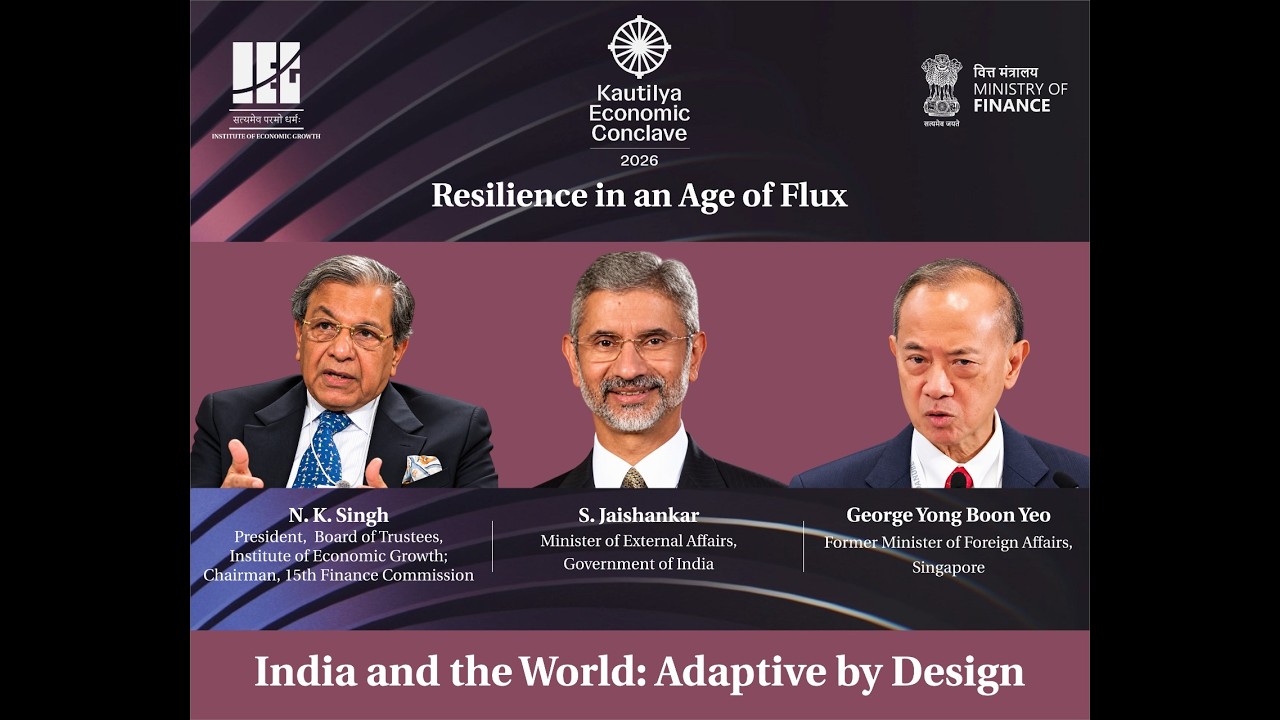
Special Concluding Address by Sh. S. Jaishankar
Hon'ble Minister of External Affairs, Government of India
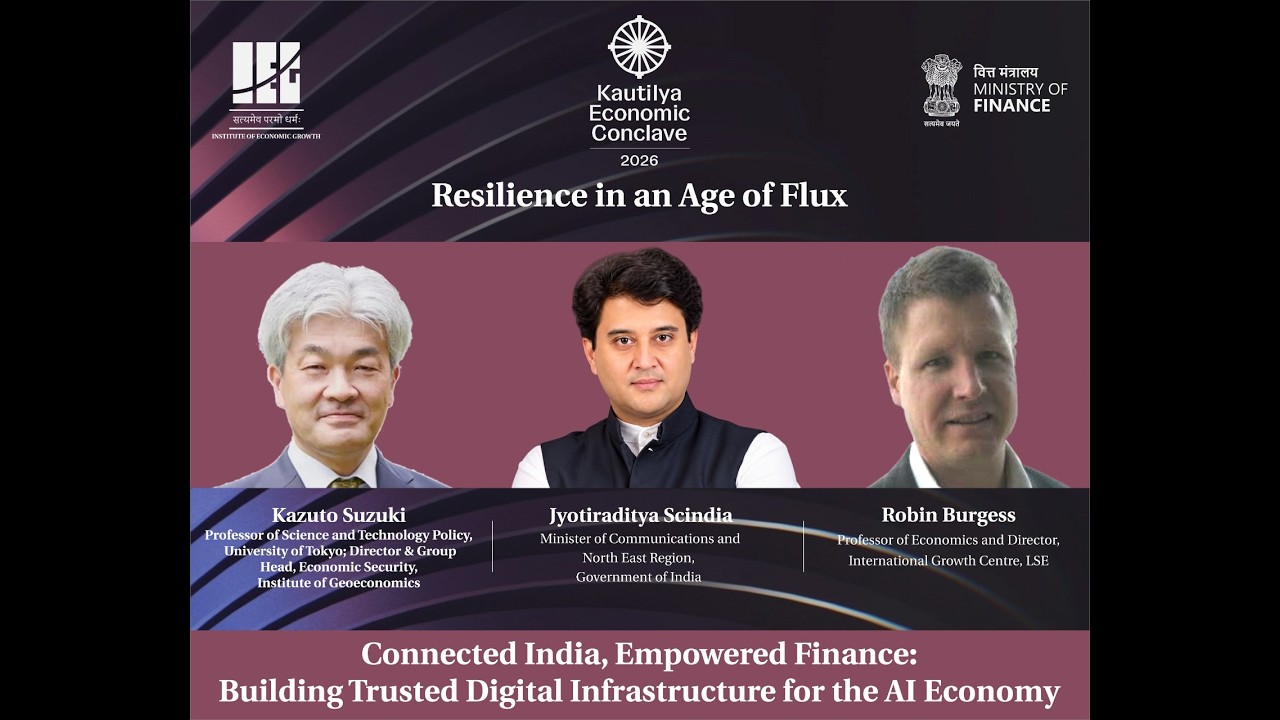
Keynote Address by Sh. Jyotiraditya Scindia
Hon'ble Minister of Communications and North East Region, GOI
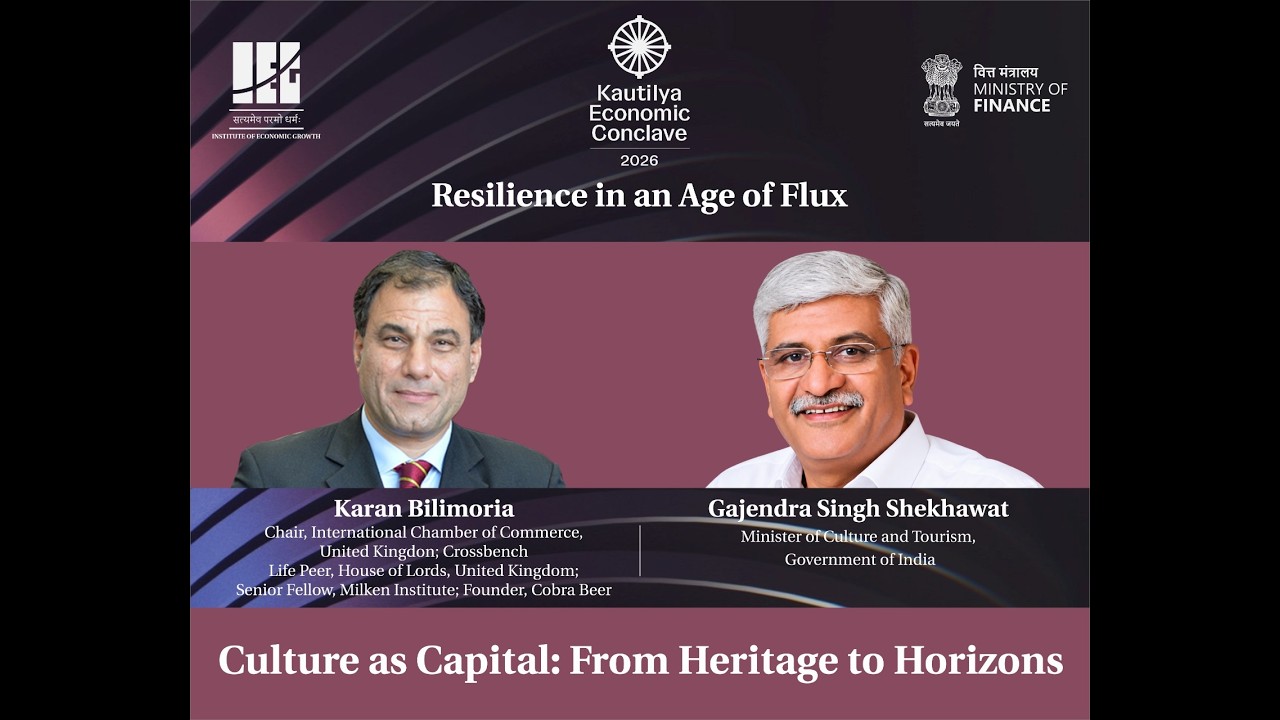
Keynote Address by Gajendra Singh Shekhawat
Hon'ble Minister of Culture and Tourism, Government of India