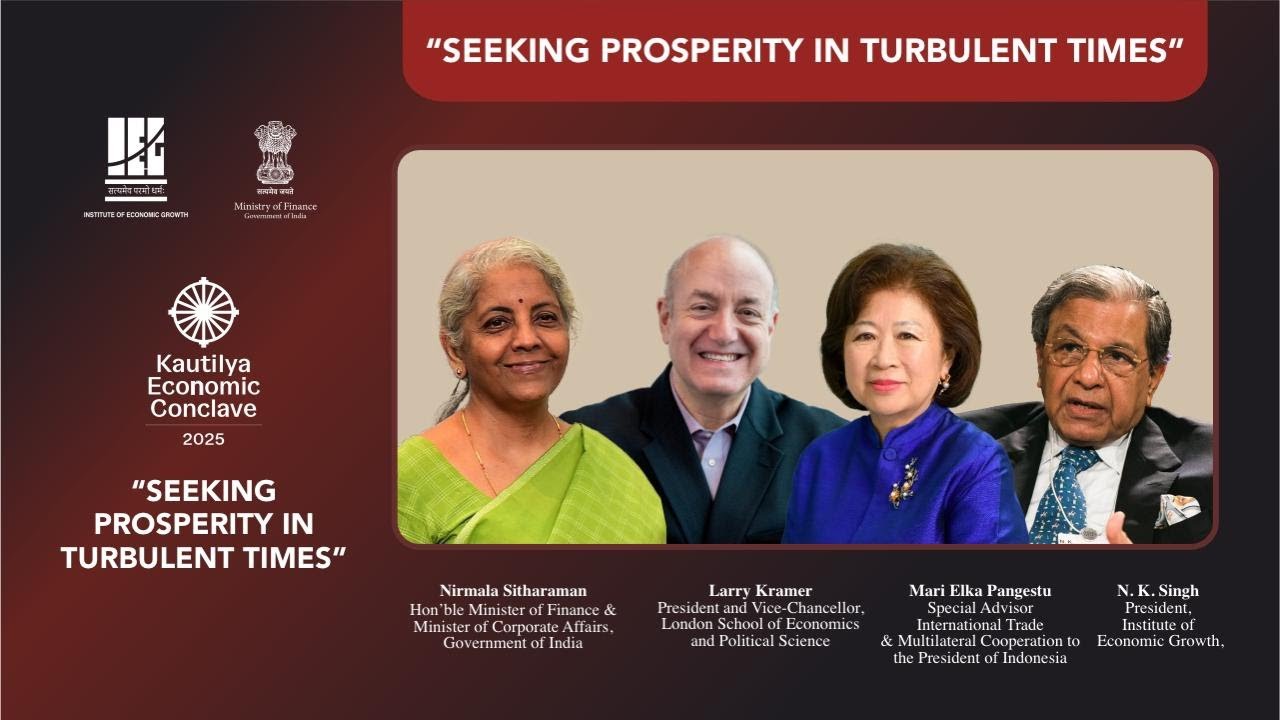
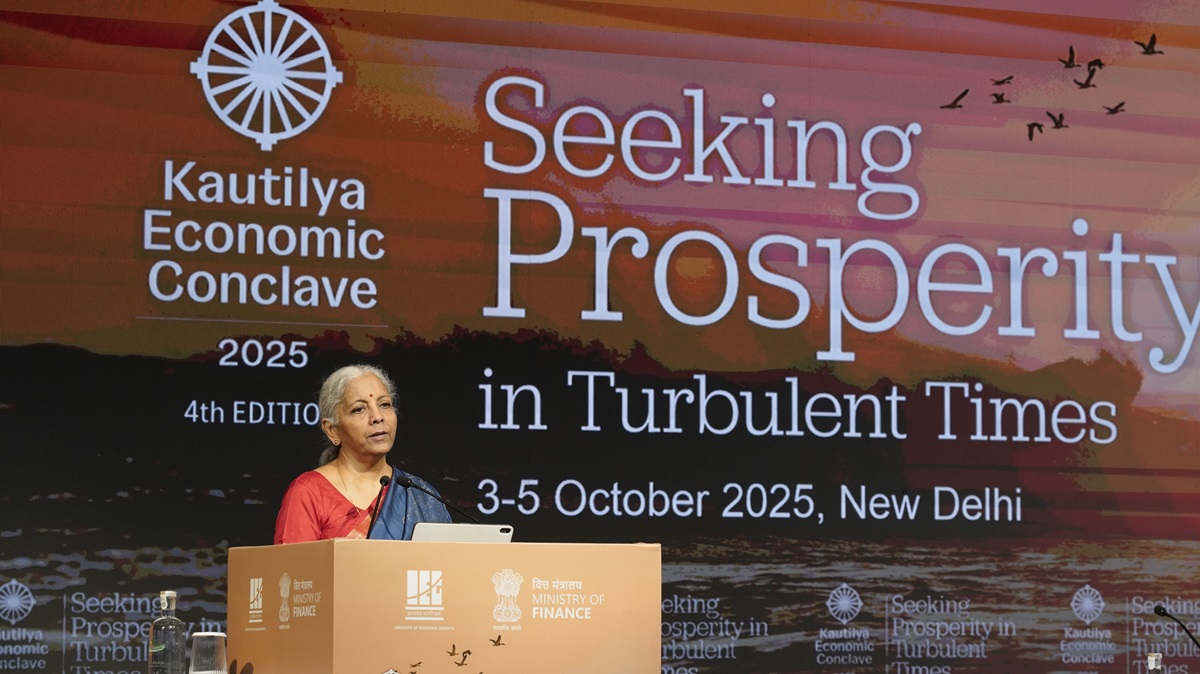
Inaugural Address by Smt. Nirmala Sitharaman at the Kautilya Economic Conclave 2025
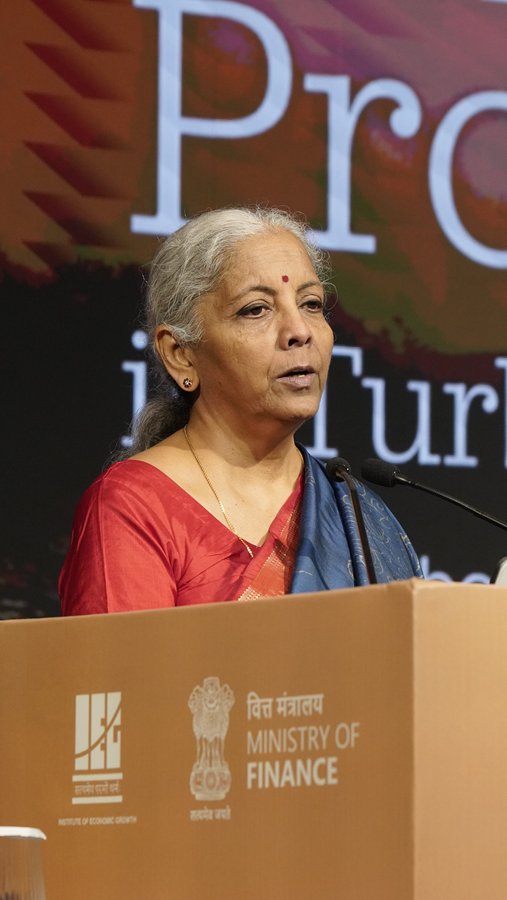
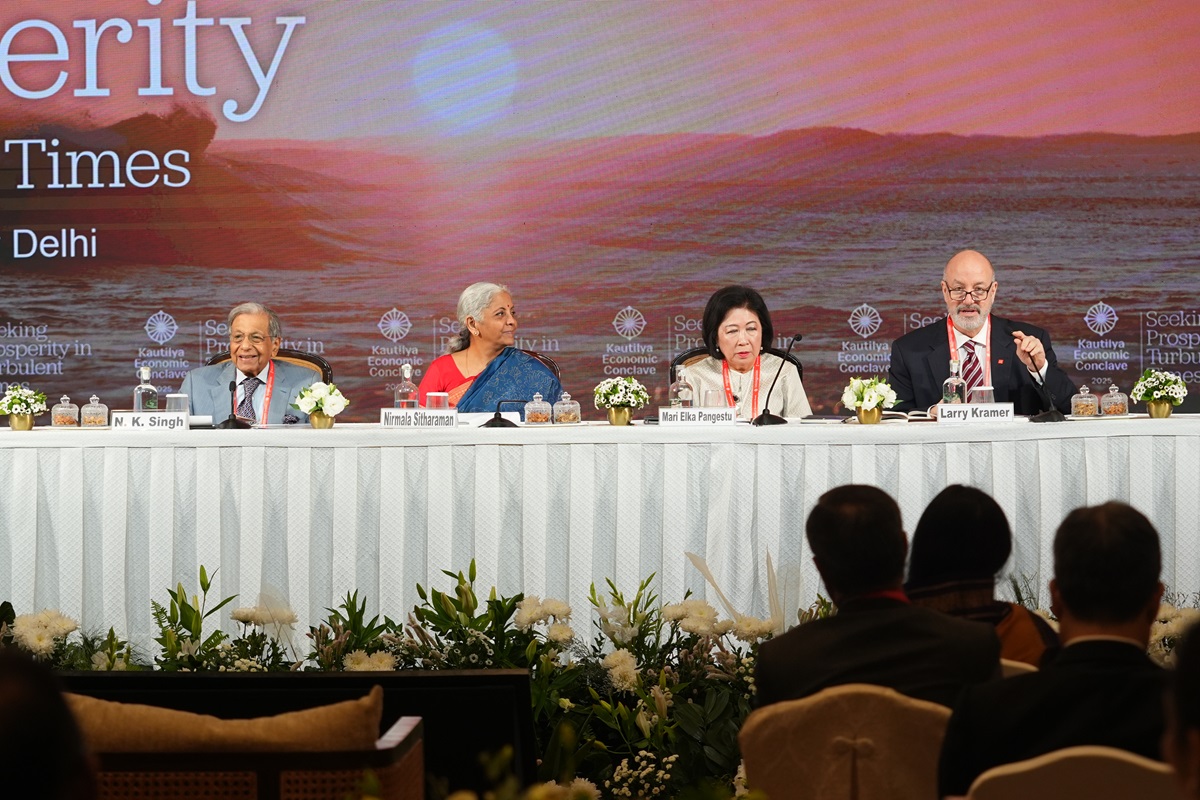
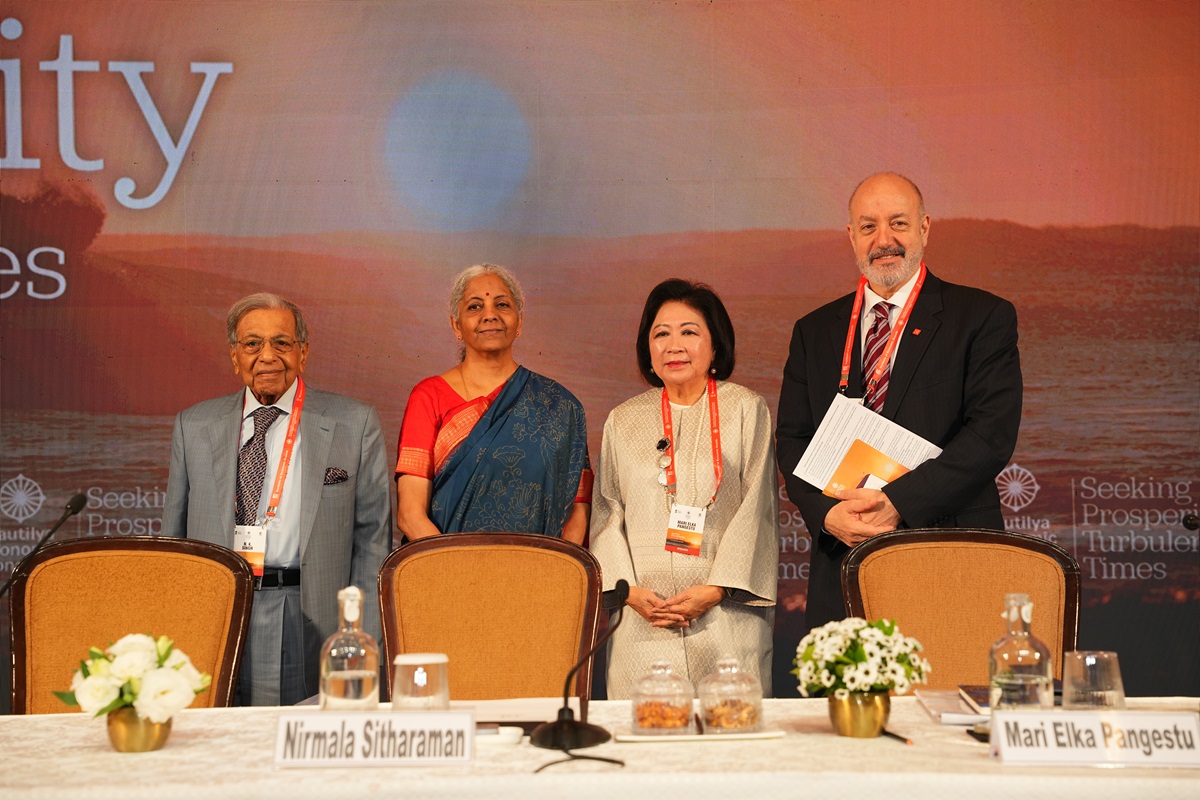
Union Minister for Finance and Corporate Affairs Smt. Nirmala Sitharaman delivered an insightful and forward-looking address at the Fourth Kautilya Economic Conclave, jointly organized by the Institute of Economic Growth and the Ministry of Finance. She began by appreciating Shri N.K. Singh’s consistent efforts in bringing together eminent economists, policymakers, and global thinkers for meaningful deliberation. The Minister emphasized that such gatherings not only enrich policymaking but also shape India’s approach to global engagement — citing the G20 Presidency of 2023 as a clear example of India’s ability to convene diverse voices to discuss pressing global challenges, particularly the reform of multilateral institutions.
Smt. Sitharaman noted that India’s economic journey is guided by a “twin-track” approach envisioned by the Hon’ble Prime Minister — one track being the goal of achieving Viksit Bharat (Developed India) by 2047, and the other being the pursuit of Atmanirbhar Bharat (Self-Reliant India). Self-reliance, she clarified, does not imply isolationism but rather the strengthening of domestic capabilities while remaining deeply engaged with global markets. To achieve this, India must grow at an 8% GDP rate, which would provide the necessary speed to reach its developmental goals within the next two decades.
She described the present era as one of unprecedented global uncertainty and structural transformation. The foundations of the post–Cold War order — globalization, open markets, and multilateral cooperation — are shifting beneath our feet. The global equilibrium that allowed nations to pursue prosperity through interdependence has been disrupted, and the rules of international engagement are being rewritten. According to the Finance Minister, what the world is experiencing is not a temporary disruption but a structural transformation, demanding fresh thinking and decisive action.
Smt. Sitharaman posed critical questions that frame today’s geopolitical reality: What lies on the other side of this transformation? Who will shape the new equilibrium? And on what terms? She observed that transformations that once took decades are now unfolding within months. Policymakers, she said, are grappling with unforeseen challenges while searching for stability in a rapidly shifting landscape. Confidence in linear progress — the belief that history only moves upward — has waned as nations now confront the bending arc of global change.
The Finance Minister described the current global economy as one characterized by low investment, high cost of capital, volatile energy prices, and a constant tension between growth, stability, and sustainability. She noted that many Asian nations, including India, have achieved remarkable growth without necessarily adopting the Western model of political or institutional values. These emerging economies, she said, are now central pillars of the global order, both economically and technologically, and their rise challenges the once-unquestioned dominance of Western liberal frameworks.
In this evolving context, Sitharaman underlined that India’s rise as a stabilizing force is deliberate and rooted in strong fundamentals, not accidental. Through strategic reforms, improved capital expenditure, and consistent control over inflationary pressures, India has strengthened its economic foundation. Structural reforms such as the ease of doing business, financial inclusion, and digital transformation have improved both productivity and quality of life. With a balanced mix of consumption and investment driving GDP, India’s growth remains largely domestically anchored, reducing vulnerability to global shocks.
However, she cautioned that resilience must not lead to complacency. Strategic independence requires continuous performance and vigilance. The Minister then turned to the dilemmas faced by developing countries in today’s geopolitical climate — the tension between energy transition and energy security, growth and sustainability, innovation and employment, and capital access versus borrowing costs. These trade-offs, she said, directly affect the daily lives of citizens and cannot be ignored.
Smt. Sitharaman warned that the world is witnessing de-risking and de-globalization, with global integration and mobility under strain. Trade imbalances, she noted, have hollowed out industries in some regions while creating overcapacity in others. Financial imbalances have concentrated wealth in speculative sectors, and energy imbalances have left many nations dependent on costly imports. The pursuit of net-zero goals, she said, risks raising costs for developing economies if not aligned with their growth imperatives.
The Minister urged that the task before the global community is not merely to manage uncertainty but to correct these deep structural imbalances. She posed a set of defining questions for policymakers: How can trade be made fair and finance redirected toward productive use? How can energy be both affordable and sustainable? How can climate action align with development needs? And how can international institutions be reformed to reflect today’s realities, giving developing nations a real voice in global rule-making?
Smt. Sitharaman acknowledged that innovations like digital currencies and stablecoins are transforming the global financial landscape, potentially forcing nations to adapt to new monetary architectures or risk exclusion. Similarly, sanctions, tariffs, and decoupling strategies are reshaping supply chains. In this environment, India’s combination of resilience and adaptability will determine whether it merely absorbs shocks or uses its strength as a foundation for leadership.
In her concluding remarks, the Finance Minister reflected on history’s cyclical nature — that crises often precede renewal. The fragmentation of today could, she said, lead to new forms of sustainable and inclusive cooperation, provided developing nations act collectively and decisively. She urged that the conclave serve as a platform not only to debate uncertainty but to shape the contours of a fairer global order.
Smt. Sitharaman ended her speech with a call for humility, dialogue, and action: “Let us treat this moment not only as a crisis but as an inflection point. Let us converse not only to ponder upon what future awaits us but also to lay out the contours of the future we wish to create.” She emphasized that the choices India and the world make today will define the course of this century, and that courage, clarity, and cooperation will be essential in steering through these turbulent times.
Photographs
KEC 2025 VIDEO